

CATEGORY: National Affairs / Defence & Economy TAGS: Operation Sindoor, India Pakistan, Pahalgam Attack, Modi, Indian Army, Defence Economy, BrahMos, Sensex
BREAKING | May 10, 2026 | National Affairs
एक साल बाद — One Year After Operation Sindoor: The Strike That Redrew India’s Security Map
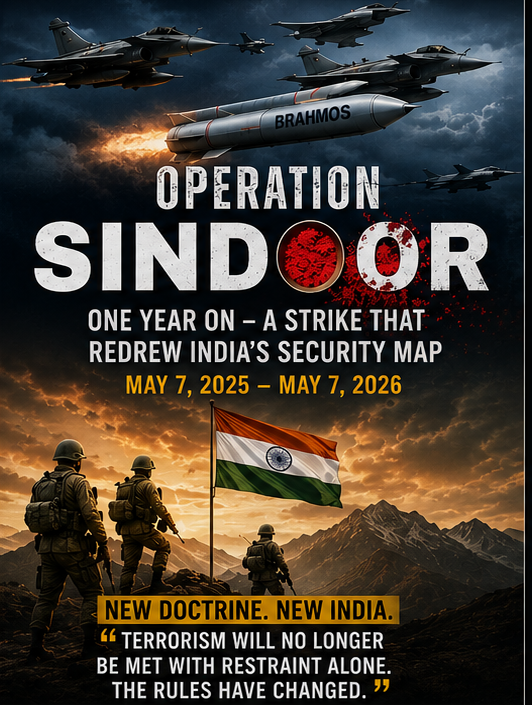
On the night of May 7, 2025, India did something it had not done in over 50 years. It struck deep inside Pakistan.
Exactly one year ago today, the skies over South Asia lit up with the glow of BrahMos cruise missiles and Rafale jets. Operation Sindoor was launched on May 7, 2025, with Indian forces conducting precision airstrikes on nine terror infrastructures across the border. The operation involved the Indian Air Force, advanced drones, missiles, and electronic warfare systems. Advanced fighter aircraft including Rafale jets reportedly used SCALP cruise missiles and HAMMER precision-guided bombs.
Today, on its first anniversary, India commemorates a moment that did not just reshape its military doctrine — it shook markets, rewrote foreign policy, and accelerated a defence manufacturing revolution.
What Triggered It All
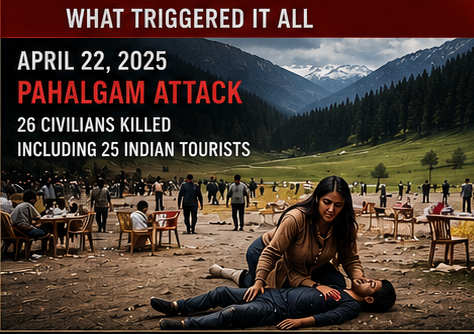
It began with tragedy. On April 22, 2025, a devastating terrorist attack in Pahalgam, Jammu and Kashmir, claimed the lives of 26 civilians, including 25 Indian tourists and one Nepalese national. Within 15 days, India responded with its most decisive cross-border military action since 1971.
Targets reportedly included the Jaish-e-Mohammed headquarters at Bahawalpur and Lashkar-e-Taiba’s base at Muridke, among others across Pakistan and Pakistan-occupied Jammu and Kashmir. Pakistan sought a ceasefire by May 9. India and Pakistan agreed to a ceasefire on May 10, after three days of military operations and as the countries stood on the precipice of war.
India Commemorates — One Year On
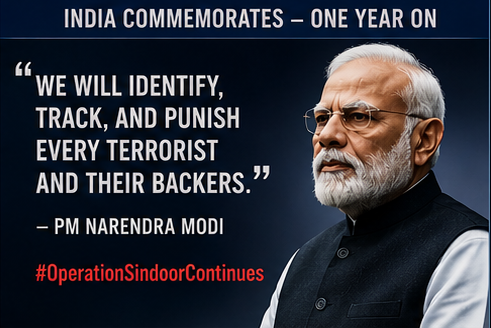
On May 7, 2026, the Indian Air Force posted a video on X, mirroring the precise hour the strikes were launched. The post stated Operation Sindoor “continues,” reinforcing India’s position that the operation remains open-ended. PM Modi’s voice featured in the video, saying India would “identify, track, and punish every terrorist and their backers.”
PM Modi, External Affairs Minister S. Jaishankar, and several senior ministers updated their social media profiles to mark the Pahalgam anniversary — a signal that the political and emotional weight of Operation Sindoor is far from fading.
How It Changed India’s Defence Economy
The operation’s economic footprint is as significant as its military one.
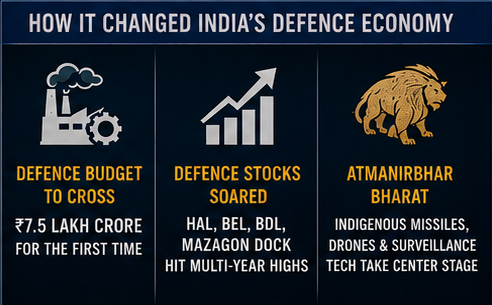
India’s growing emphasis on self-reliance in defence manufacturing gained enormous attention after the operation. Indigenous missile systems, drones, and surveillance technologies were widely discussed as symbols of the success of the “Atmanirbhar Bharat” initiative in the defence sector.
Defence stocks on Dalal Street surged sharply in the weeks following May 7, 2025 — HAL, BEL, Bharat Dynamics, and Mazagon Dock Shipbuilders all hit multi-year highs as investor confidence in India’s domestic defence industry soared. Analysts estimate that India’s defence budget allocation will see an additional push in the upcoming Union Budget, with spending expected to cross ₹7.5 lakh crore for the first time.
The Geopolitical Aftershocks
Russia condemned acts of terrorism while calling for de-escalation. China called India’s missile strikes regrettable, while stating its opposition to all forms of terrorism and urging de-escalation. Iran expressed readiness to help de-escalate tensions.
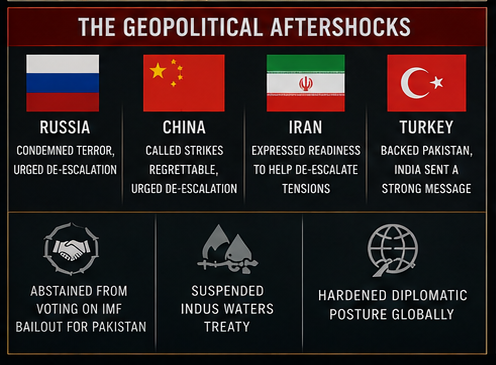
India’s diplomatic posture hardened significantly post-Operation Sindoor. New Delhi abstained from voting on the IMF’s proposed $1.3 billion bailout for Pakistan, sent a clear message to Turkey — which had openly backed Islamabad — and suspended the Indus Waters Treaty, one of the most consequential diplomatic decisions in decades.
A Year Later — Is India Safer?
In the months following the military exchanges, Indian leaders and officials said that New Delhi’s approach to terrorist attacks henceforth would be “firm, decisive and unwavering.” Another terror attack would trigger a strong response from India, they warned. An assessment of recent trends indicates that the space for restraint is narrowing and escalation dynamics are changing.
The hard truth is that one year on, the ceasefire holds — but only just. Cross-border incidents continue along the LoC, diplomatic channels remain frozen, and both nations have significantly increased their defence spending. The deterrence calculus of South Asia has been permanently altered.
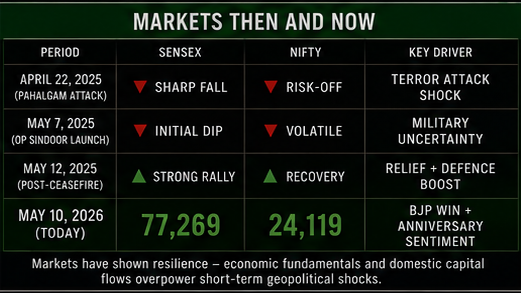
Indian markets have shown remarkable resilience — proof that economic fundamentals and domestic capital flows ultimately overpower short-term geopolitical shocks.
What It Means for India Going Forward
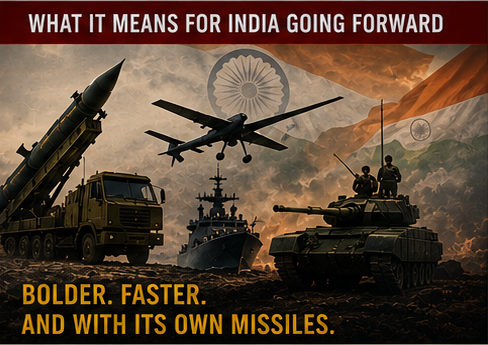
Operation Sindoor established a new doctrine: terrorism will no longer be met with restraint alone. For businesses, investors, and citizens alike, the one-year mark is not just a memorial — it is a reminder that India today operates under a different set of rules. Bolder. Faster. And with its own missiles.
Disclaimer: This article is for informational purposes only. Views expressed are editorial in nature and do not constitute any political endorsement.