
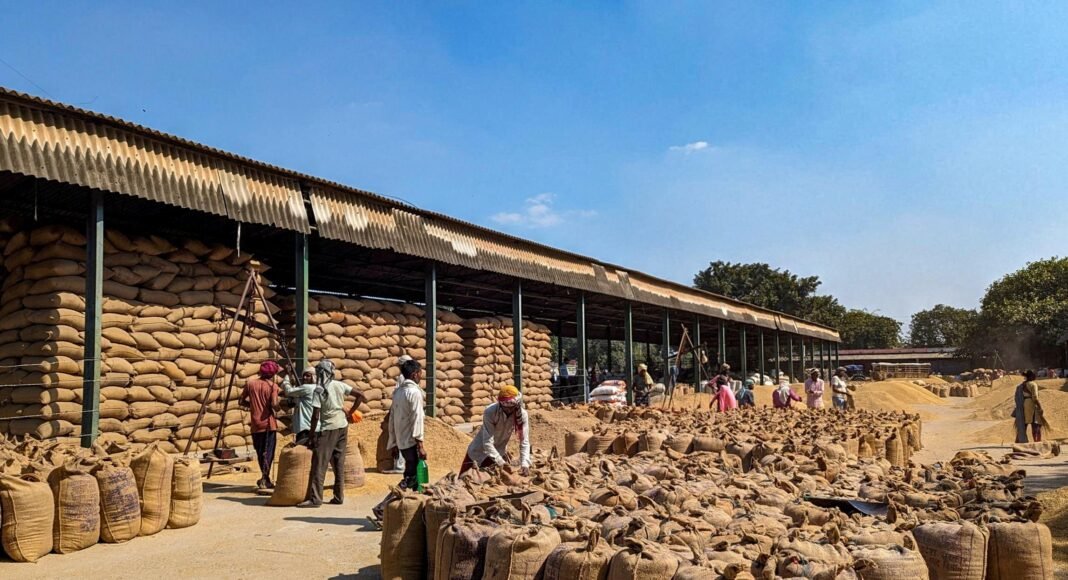


India has recorded one of its strongest wheat procurement seasons in recent years, strengthening the country’s food security and ensuring adequate grain supplies for the public distribution system. Higher procurement by government agencies reflects improved agricultural output and is expected to help stabilize food availability across the country.
The successful procurement season also provides confidence for policymakers as India prepares for future food requirements while supporting millions of farmers through minimum support price (MSP) operations.
Record Wheat Procurement Supports Food Security


Government agencies have procured large quantities of wheat during the current procurement season.
Key benefits include:
- Stronger food reserves
- Better support for farmers
- Stable grain availability
- Improved public distribution
- Enhanced food security
Officials believe robust procurement will help maintain adequate stocks for welfare schemes and emergency requirements.
Farmers Receive Better Market Support


The procurement drive has enabled many farmers to sell their produce through government-supported channels.
Positive outcomes:
- Timely procurement
- Fair price support
- Reduced market uncertainty
- Improved rural income
- Greater confidence among farmers
Agriculture continues to play a vital role in India’s economy and rural employment.
Modern Storage and Supply Chain Improvements


Alongside procurement, India is investing in modern grain storage and logistics.
Current priorities:
- Scientific grain storage
- Modern silos
- Faster transportation
- Reduced post-harvest losses
- Efficient distribution
Improved infrastructure is expected to enhance the efficiency of the country’s food supply chain.
Agriculture Continues to Drive Economic Growth


A strong wheat season contributes not only to food security but also to the broader economy.
Economic impact:
- Higher rural spending
- Better farm incomes
- Stable food supplies
- Strong agricultural growth
- Support for allied industries
Experts say sustained agricultural performance remains essential for India’s long-term economic development.
Looking Ahead


India is increasingly combining traditional farming with modern technologies to improve productivity and sustainability.
Future priorities include:
- Smart agriculture
- Climate-resilient farming
- Digital marketplaces
- Better irrigation
- Advanced storage infrastructure
These initiatives are expected to strengthen India’s agricultural sector in the years ahead.
Conclusion
India’s strong wheat procurement season highlights the country’s continued commitment to food security, farmer welfare, and agricultural development. With improved procurement, expanding storage infrastructure, and sustained policy support, India is well-positioned to maintain stable food supplies while supporting millions of farming families.