
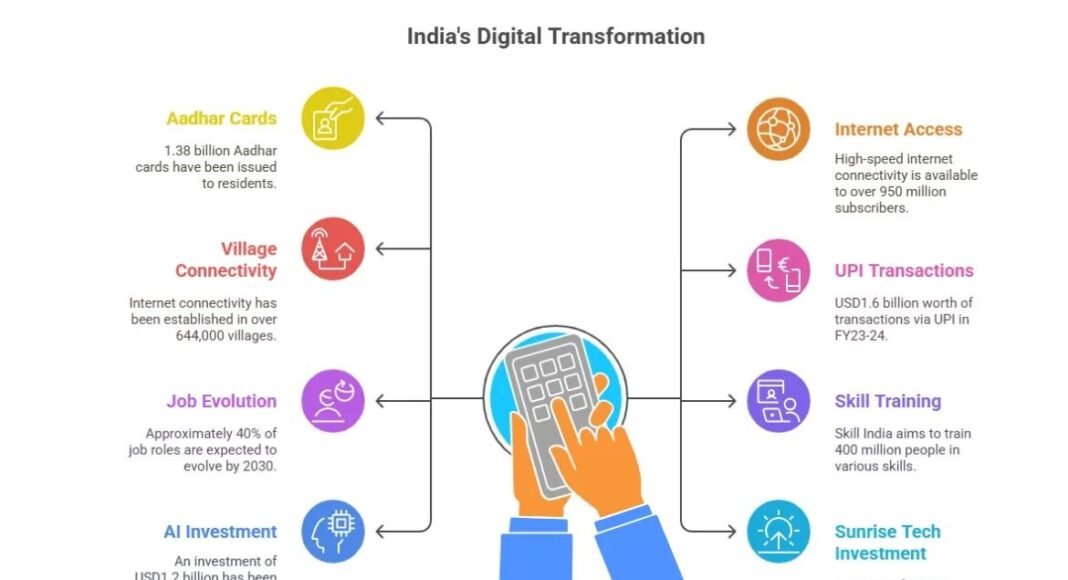


India’s digital transformation journey continues to accelerate in 2026 as technology becomes increasingly integrated into everyday life. From digital payments and online public services to smart cities and AI-powered governance, the Digital India initiative is reshaping how citizens interact with businesses, government institutions, and technology.
Experts believe India’s digital infrastructure has become one of the country’s most significant strengths, driving innovation, financial inclusion, and economic growth across urban and rural regions alike.
UPI and Digital Payments Transforming Transactions


Digital payments continue to revolutionize financial transactions across India.
Key developments include:
- Growth in UPI transactions
- Expansion of QR code payments
- Increased digital banking adoption
- Greater financial inclusion
- Faster business transactions
Small businesses, street vendors, and large enterprises alike are increasingly relying on digital payment systems to improve efficiency and accessibility.
Smart Cities Driving Urban Innovation


India’s Smart Cities Mission continues to modernize urban infrastructure through technology-driven solutions.
Major focus areas:
- Smart traffic management
- Intelligent surveillance systems
- Digital public services
- Efficient waste management
- Sustainable urban planning
Urban planners believe these initiatives will improve quality of life while supporting sustainable city development.
Artificial Intelligence Enhancing Public Services


Artificial Intelligence is playing an increasingly important role in governance and public administration.
Applications include:
- Data-driven policy planning
- Healthcare support systems
- Educational technologies
- Public service automation
- Citizen assistance platforms
Experts believe AI can help improve service delivery while increasing operational efficiency.
Digital Connectivity Reaching Rural India


One of the most significant achievements of Digital India has been the expansion of connectivity into rural areas.
Benefits include:
- Online education access
- Digital healthcare services
- E-commerce opportunities
- Financial inclusion
- Agricultural information services
Improved internet access is helping bridge the gap between rural and urban communities.
Digital Economy Creating New Opportunities


The digital economy is creating employment and business opportunities across multiple sectors.
Areas experiencing growth include:
- Software development
- Data analytics
- Cybersecurity
- E-commerce
- Artificial Intelligence
- Digital marketing
Industry analysts expect the digital sector to remain a major contributor to India’s economic expansion.
Cybersecurity Becomes a National Priority


As digital adoption increases, cybersecurity has become a critical area of focus.
Key concerns:
- Data privacy
- Cyber threats
- Online fraud
- Digital infrastructure protection
- Secure digital transactions
Experts emphasize the importance of robust cybersecurity frameworks to support long-term digital growth.
Conclusion
Digital India 2026 reflects the country’s ongoing commitment to technology-driven development. Through digital payments, smart cities, AI-powered services, and expanded connectivity, India is building a more connected, efficient, and inclusive society.
As innovation continues to accelerate, digital transformation is expected to remain a key driver of economic growth, public service improvement, and technological leadership in the years ahead.