

New Delhi / New York — September 29, 2026
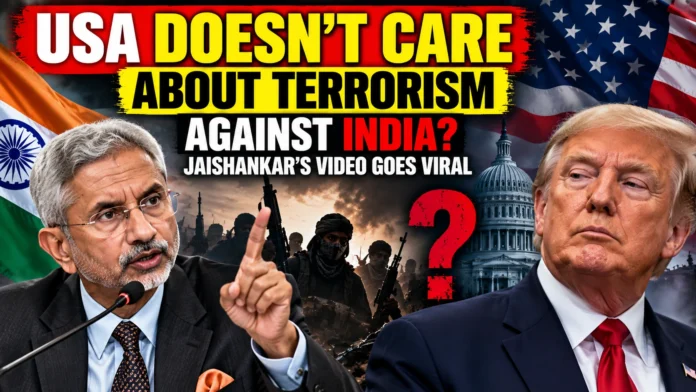
A recent intervention by External Affairs Minister S. Jaishankar has reignited debate over India’s concerns about terrorism and the future of India-US relations. Speaking at the Asia Society in New York, Jaishankar said that India’s concerns over terrorism originating from its neighbourhood need to be better understood by its international partners, including the United States.
His remarks have attracted significant attention online, with discussions focusing on whether Washington’s current approach toward Pakistan sufficiently reflects India’s security concerns.
Jaishankar Flags a “Lack of Empathy”
Jaishankar said that India has faced terrorism from a neighbouring country for decades and suggested that insufficient understanding of this concern among partners could affect bilateral relationships.
The comments came amid broader discussions about India-US relations, including differences over trade negotiations, tariffs, mobility and Washington’s engagement with Pakistan.
Importantly, Jaishankar did not say that the United States supports terrorism against India. Rather, his criticism was directed at what he described as an inadequate appreciation of India’s security concerns.
Why Pakistan Is Central to the Debate
Although Jaishankar did not explicitly name Pakistan in the remarks, reports identified his comments as referring to India’s long-standing concerns about cross-border terrorism.
India has repeatedly accused Pakistan-based groups of involvement in attacks against India, while Pakistan has rejected such allegations and disputes India’s characterization of the issue.
The issue has remained one of the most sensitive subjects in India-Pakistan relations.
This video embedded form twitter . Source ANI and credit Wion News.
Jaishankar’s UN Appearance Also Went Viral
The latest controversy follows another widely circulated Jaishankar video from the United Nations General Assembly week.
During a media interaction in New York, a Pakistani journalist questioned Jaishankar about terrorism. Jaishankar responded: “A terrorist country is asking me that question?” The exchange was reported by multiple Indian media outlets and quickly circulated online.
The incident added to the attention surrounding India’s diplomatic messaging on terrorism during the UN General Assembly.
But Does America “Not Care”?
The evidence does not support the simple conclusion that the United States does not care about terrorism against India.
In May 2026, Jaishankar and then-US Secretary of State Marco Rubio publicly described terrorism as a shared challenge and said the two countries had strong counter-terrorism cooperation. Jaishankar also highlighted US cooperation in the extradition of a key planner of the 26/11 Mumbai attacks.
The current disagreement is therefore more nuanced: India is pressing Washington to give greater weight to its concerns about terrorism and Pakistan, while the broader India-US relationship continues to include counter-terrorism cooperation.
What This Means for India-US Relations
Jaishankar’s latest comments suggest that terrorism remains an important issue in the relationship even as India and the United States cooperate across areas such as technology, trade, strategic affairs and security.
His message also highlights a recurring feature of Indian foreign policy: New Delhi wants international partnerships to take India’s security concerns into account rather than treating them as secondary to other diplomatic priorities.
For now, the debate is less about whether India and the US cooperate against terrorism and more about how Washington approaches India’s concerns regarding Pakistan and regional security.
Key Takeaway
Jaishankar’s comments have put India’s terrorism concerns at the centre of renewed discussion about India-US relations. While his criticism has generated headlines suggesting that the US is indifferent to terrorism against India, publicly documented evidence also shows ongoing US-India counter-terrorism cooperation.
The latest remarks therefore point to a diplomatic disagreement over priorities and perceptions, rather than evidence that Washington does not oppose terrorism targeting India.