
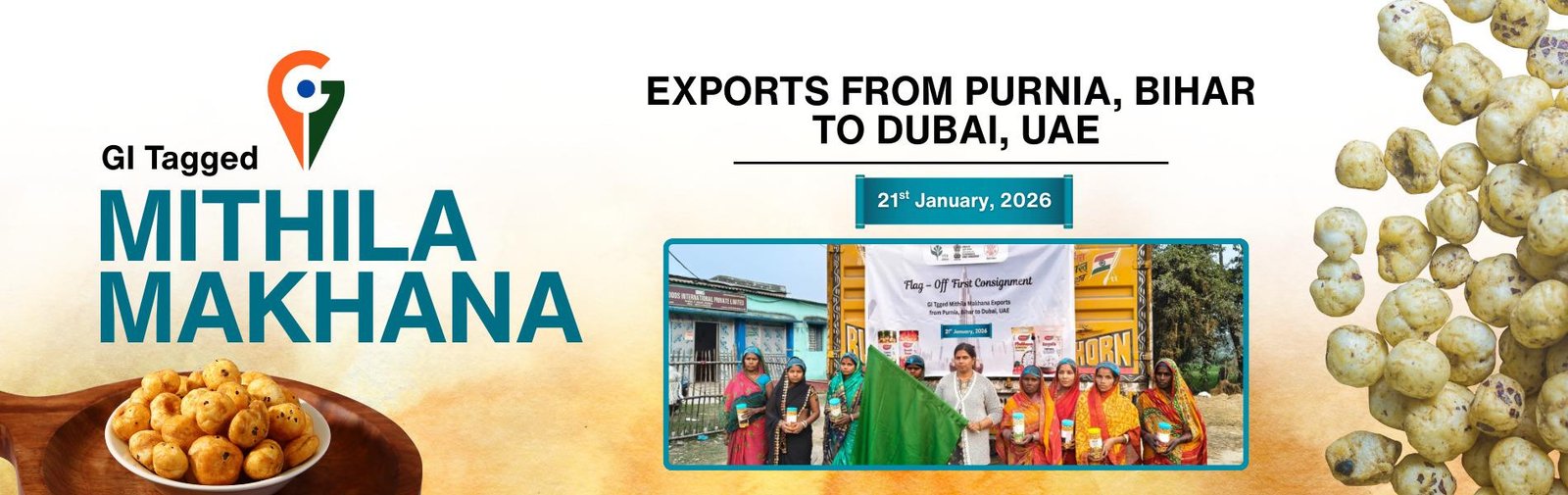


Makhana has become one of Bihar’s most recognized agricultural products. Known for its nutritional value and growing global demand, the crop has evolved from a traditional local food into a modern health snack. However, despite dominating India’s production, Bihar still faces a major challenge — building a strong global identity for its makhana industry.
Experts believe that geographical branding, quality certification, and value-added marketing can significantly increase Bihar’s presence in international markets.
Understanding the Importance of GI Tag


A Geographical Indication (GI) tag helps identify products that originate from a specific region and possess unique qualities linked to that area.
For Bihar’s makhana industry, GI recognition is important because it:
- Protects product authenticity
- Builds international trust
- Increases market value
- Prevents duplication by other producers
- Strengthens regional identity
Globally recognized agricultural products often gain higher demand and premium pricing due to strong geographical branding.
Why Branding Matters in Modern Food Markets


In today’s competitive market, product quality alone is not enough. Branding plays a critical role in attracting consumers.
Many international snack companies succeed because of:
- Attractive packaging
- Consistent quality
- Strong storytelling
- Health-focused marketing
Makhana has strong branding potential as:
- A traditional Indian superfood
- A healthy low-fat snack
- A plant-based nutrition product
Professional branding can help Bihar position makhana in premium global markets.
Bihar’s Dominance in Makhana Production


Bihar contributes the majority of India’s makhana production, particularly in the Mithila region.
The state benefits from:
- Favorable wetland conditions
- Traditional farming expertise
- Skilled processing workers
- Strong rural involvement in cultivation
Despite this dominance, much of the industry still operates through unorganized local supply chains, limiting its international competitiveness.
Export Opportunities and Global Potential


The global healthy snack market is expanding rapidly.
Countries including:
- USA
- UAE
- United Kingdom
- Australia
- European nations
are increasingly importing Indian makhana products.
Reasons for rising international demand:
- Low-calorie snack trend
- Growth of fitness-focused diets
- Demand for gluten-free foods
- Shift toward plant-based nutrition
With proper branding and export strategies, Bihar can capture a much larger share of this growing market.
Challenges Facing the Industry


Despite strong market potential, the industry still faces several structural challenges.
Major issues include:
- Limited modern packaging infrastructure
- Lack of international branding campaigns
- Dependence on traditional processing methods
- Weak export logistics
- Price fluctuations affecting farmers
Without modernization, Bihar may struggle to maximize the economic value of its makhana industry.
The Need for Strategic Industry Development


Experts suggest that Bihar’s makhana industry needs a long-term development strategy focused on:
- Global branding initiatives
- Startup support
- Export infrastructure
- Food processing technology
- Farmer training and awareness
Collaboration between government agencies, startups, and agricultural institutions can help build a stronger international presence.
Conclusion
Makhana represents one of Bihar’s strongest agricultural identities. However, to compete globally, the industry must move beyond raw production and focus on branding, quality standards, and international market positioning.
With proper investment and strategic planning, Bihar’s makhana could emerge as one of India’s most successful premium agricultural exports.