
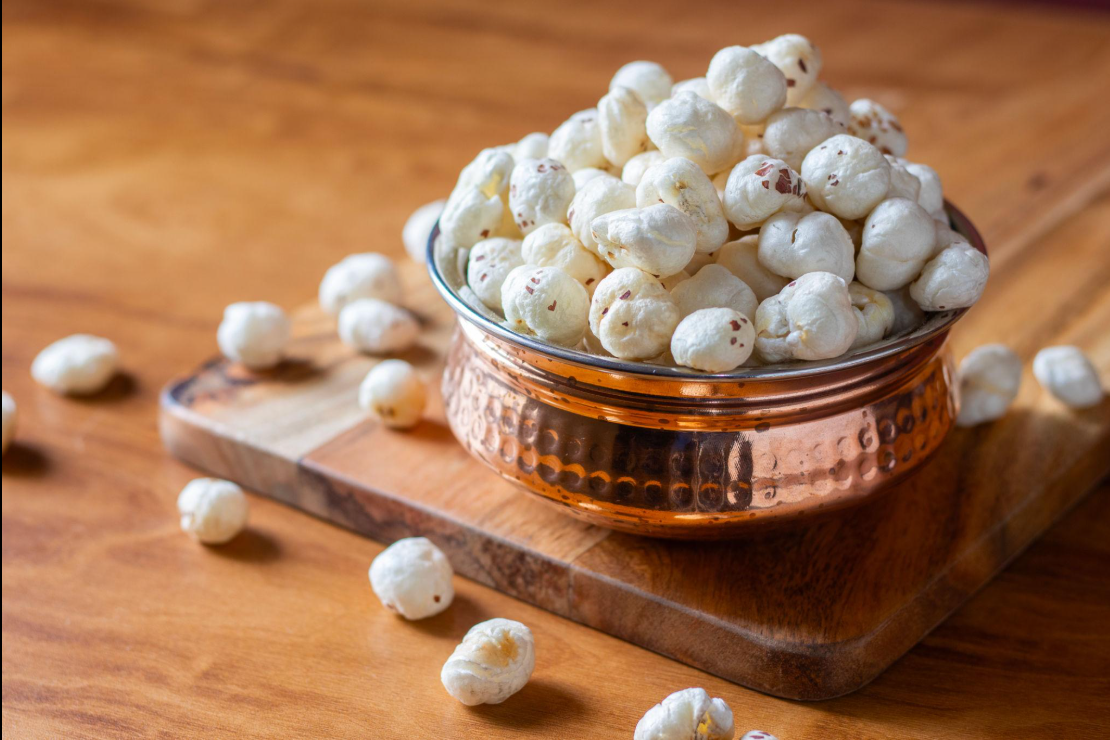

Makhana, often called the superfood of Bihar, has moved far beyond traditional kitchens and temple offerings. Today, it is a fast-growing snack in supermarkets, gyms, and global export markets. But before reaching a colorful packet on a store shelf, makhana travels through a fascinating and labor-intensive journey—from muddy ponds to modern packaging units.
Let’s explore the complete farm-to-market journey of makhana.
Cultivation in Ponds and Wetlands


Makhana grows in stagnant ponds, wetlands, and low-lying water bodies. Bihar produces nearly 80–90% of India’s makhana, especially in the Mithila region.
Key facts:
- Seeds are planted in December–January
- Large floating leaves cover the pond surface
- The crop grows naturally in muddy and nutrient-rich water
- Farming requires high manual labor and skill
Unlike typical crops, makhana farming is aquatic and risky—farmers often work chest-deep in water.
Harvesting: A Tough Underwater Job


Harvesting begins around May–July.
Seeds sink to the pond bottom, so farmers must:
- Dive underwater
- Collect seeds by hand
- Store them in baskets
This stage is physically demanding and requires experienced divers. A single farmer may spend hours underwater daily collecting seeds.
Sun Drying the Seeds


After harvesting, raw seeds are spread in open areas for sun drying.
Why drying is important:
- Removes moisture
- Hardens the outer shell
- Prepares seeds for roasting
This stage usually takes 2–3 days under strong sunlight.
Roasting and Popping – The Magic Step


This is the most fascinating part of makhana processing.
Traditional popping process:
- Seeds are roasted in hot sand
- Heated seeds are quickly hammered
- Seeds pop like popcorn
- White fluffy makhana emerges
This step requires great timing and expertise. A few seconds early or late can ruin the batch.
Sorting and Grading


Once popped, makhana is sorted into grades based on:
- Size
- Whiteness
- Shape
- Quality
Larger, rounder makhana fetch higher market prices and are preferred for export.
Flavoring, Packaging and Branding


Modern food startups have transformed makhana into a trendy snack.
Popular flavors:
- Peri Peri
- Cheese
- Mint
- Cream & Onion
- Chocolate (sweet version)
After roasting and flavoring:
- Packed in airtight pouches
- Branded for retail and online sales
- Distributed to supermarkets and e-commerce platforms
This step converts a traditional crop into a modern snack product.
From Local Markets to Global Export
Today, makhana is exported to:
- USA
- UAE
- UK
- Australia
- Canada
What started as a local crop is now a global health snack competing with almonds and popcorn.
Why This Journey Matters
The makhana value chain:
- Provides employment to thousands of rural families
- Supports women workers in processing units
- Creates startup and export opportunities
- Promotes Bihar’s agricultural identity worldwide
Conclusion
The next time you open a packet of makhana, remember the incredible journey behind it—from deep village ponds to global snack shelves. It is not just food; it is a story of hard work, tradition, and growing opportunity