
New Delhi | June 10, 2026
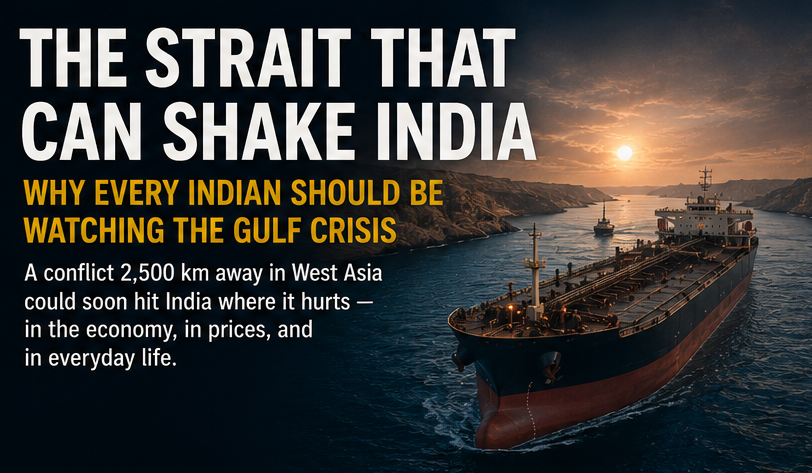
Most Indians woke up this morning without hearing a single siren. There were no missile alerts in Delhi, no explosions in Mumbai, and no fighter jets over Bengaluru. Yet a conflict unfolding more than 2,500 kilometres away could soon affect the price of petrol, airline tickets, vegetables, and even home loans across India.
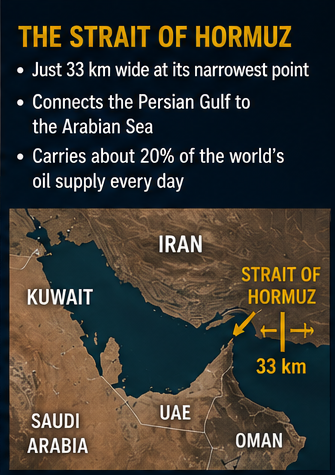
The reason lies in a narrow stretch of water called the Strait of Hormuz.
Barely 33 kilometres wide at its narrowest point, the strait connects the Persian Gulf to the Arabian Sea. On most days, it is simply another shipping route. During a war, it becomes the most strategically important waterway on Earth.
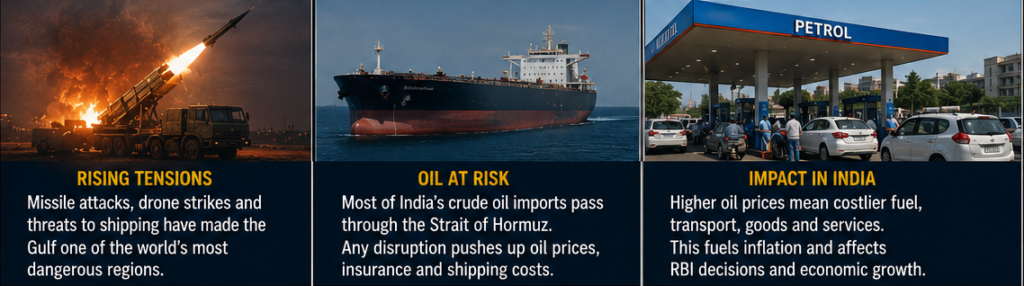
Over the past week, tensions between Iran and the United States have intensified dramatically. Missile launches, drone interceptions, attacks on military facilities, and threats against commercial shipping have transformed the Gulf into one of the world’s most dangerous regions.
For India, the concern is not military. It is economic.
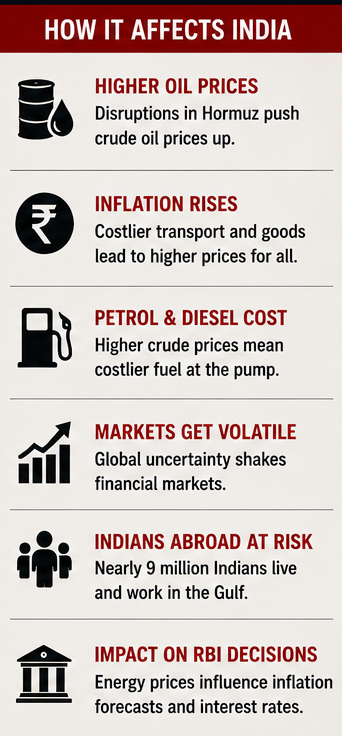
India imports the majority of its crude oil requirements, and a significant portion of that oil passes through the Strait of Hormuz. Every tanker delayed, diverted, or threatened increases uncertainty in global energy markets. Traders react instantly. Oil prices rise. Insurance costs surge. Freight becomes more expensive.
The effects travel thousands of kilometres in a matter of hours.
When oil becomes expensive, transport costs increase. When transport costs increase, businesses pass on those costs to consumers. The result is inflation that reaches households far removed from the conflict zone.
The Reserve Bank of India watches these developments closely because energy prices influence everything from inflation forecasts to interest-rate decisions. A prolonged disruption in Gulf shipping could complicate economic planning at a time when India is pursuing ambitious growth targets.
There is another reason India is paying close attention.
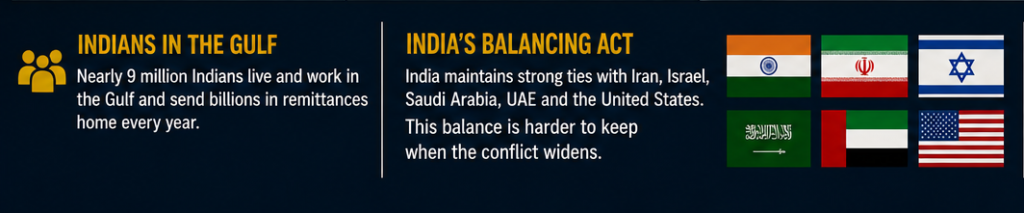
Nearly nine million Indians live and work across the Gulf region. They form one of the largest overseas communities in the world and send billions of dollars home every year. Any escalation that threatens regional stability also raises concerns about the safety of Indian citizens abroad and the flow of remittances that support countless families back home.
For decades, India’s strategy in West Asia has been built on balance. New Delhi maintains relationships with Iran, Israel, Saudi Arabia, the UAE, and the United States simultaneously. That diplomatic balancing act becomes far more challenging when conflict expands across multiple fronts.
The missiles launched this week may not have been aimed at India. The drones crossing Gulf skies may never enter Indian airspace. Yet their consequences could still arrive in Indian wallets, businesses, and financial markets.
That is why what happens in the Strait of Hormuz rarely stays in the Strait of Hormuz.
In an interconnected world, a conflict at a distant chokepoint can become a domestic economic story overnight. And for India, that story may only be beginning.